In a world of cycling trends, revolving doors, Micro/ Macro trends, and seemingly endless sources. It can be mind-boggling to decide which ones to jump on for product development. In this post, we will give you 4 tips on how to verify market trends. Keeping up with trends and offering products that reflect them can be a gamble, especially for small businesses. So, planning your product needs some strategy.
Check Google Trends
Google Trends is one of the most helpful tools for small businesses to have in their pocket. It’s a free and accurate source. And rather than being based on an opinion or a sales point, it is based on real search data. When you look at the graph, you can tell if something is growing in interest or falling out of interest. Which is helpful when planning your next product.
For example, I read an article stating interest in fragrances that smell like vanilla is in decline because of a large increase in the population using GLP-1. However, look at this graph for “vanilla perfume” and see how interest in vanilla perfume is actually growing. This graph is based on a broad spectrum of people searching for “vanilla perfume”. Using this tool can show you what people are searching for in real-time, rather than hearsay.
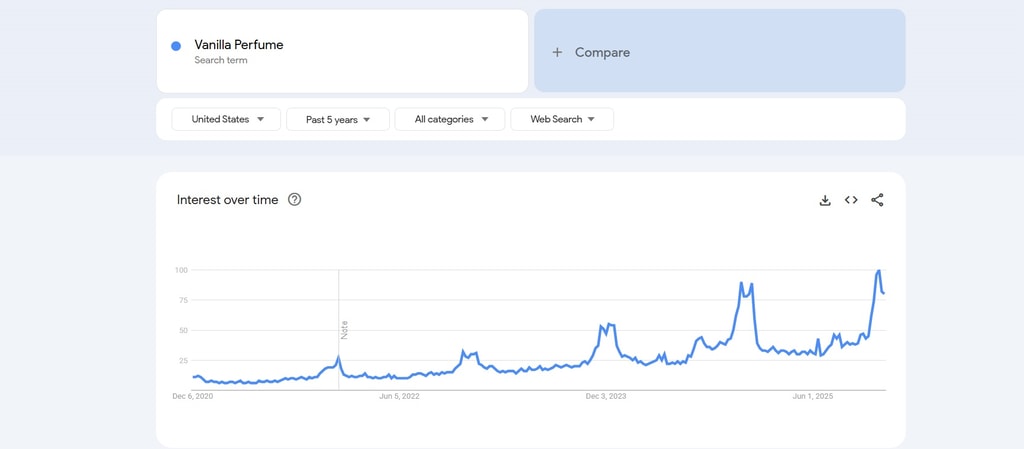
We like this tool because it is accurate, easy to use, and free. Perfect for small businesses looking to make more informed business decisions. In this example, Vanilla Perfume is not going anywhere.
Don’t forget to look at the map to see the Interest by Subregion. This shows how popular that term is by state. By clicking on the state, you can dive deeper into the state, county, and city. This will help you get a better idea of how popular a search term is in your demographic. Sometimes a type of product will be trending on the East Coast, but not so much on the West Coast.
Social Media Insights
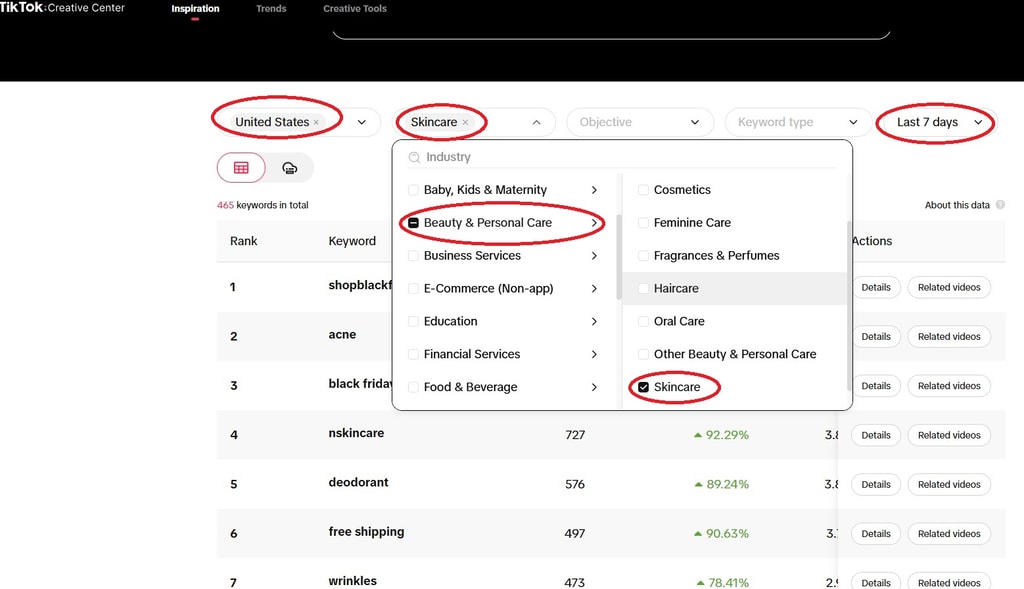
Social media has one of the biggest influences on today’s population. From food to lifestyle, there is content on just about everything. And as a retail brand, you want your product to make it on trending pages. Most platforms have insights or pages that show keywords/subjects of what is trending. Here is one for TikTok, it has dropdowns that help you refine the country, industry, and timeline.
For this example, we will be selecting the United States for the country. For the Industry dropdown, we’ve selected the Beauty & Personal Care option with a sub-selection of Skincare. And you want to check the Last 7 days and Last 120 days options, so you can compare the keywords. Notice any similarities?
The keyword “acne” made it to spot number two, just below “black friday deals”. And it was pretty close to the top for the last 120 days. So when you’re looking for inspiration for your next product. A good starting point would be skincare with acne-fighting ingredients.
Cross-Reference Different Articles
When it comes to personal care, reading articles from fashion, health, and culture can help you grasp a better idea of what people are looking for when it comes to hair and skincare. However, you don’t want to look at just one. An article like this one may say “gourmand fragrances like vanilla are no longer doing well”. While Google Trends, as mentioned above, shows otherwise. Take the time to read multiple articles from not only your niche, but also other skincare industries and regions as well. For example, reading indie skincare and big fashion articles could give you a broader idea of what is trending.
Pay Attention to Other Market Trends
Cosmetics aren’t the only thing that inspires personal care trends. Food, botanics, movies, shows, and travel often have a heavy hand in what trends arise for bath and body.
For example, the Crumbl Cookie Dove “collab”. For those who did not know, Crumbl Cookie is a brand of extremely popular cookies. With lines that wrapped around buildings, they became a viral brand. So, Dove, one of the world’s biggest personal care brands, released a deodorant, body wash, body scrub, and lotion scented with fragrances inspired by the brand’s most popular cookies. Like the cookie, the products sold like crazy.
Another example is Matcha Tea. 2025 was a big year for matcha tea. People noticed that not only is matcha delicious and healthy, but it also has benefits for the skin. So brands came out with matcha cleansers, face masks, serums, and more. With many of them receiving high ratings.
Closing Thoughts On How To Verify Market Trends
These are our 4 tips on how to verify market trends. As a personal care business, it is important to do your research before spending time and money on a market trend.
- Check Google Trends
- Use Social Media Insights
- Cross-Reference Different Articles
- Pay Attention to Other Market Trends
Doing just a little bit of digging and observing the market can help your business immensely. Find Essentials by Catalina bases, fragrances, and raw ingredients on our website. Follow our blog for recipes, market trends, tools, and ingredient information.
What is the meaning of a market trend?
A market trend is the general direction a market is moving over time. It reflects consumer behavior, demand, or prices. It can be for products, routines, or behavior. A market trend can last short-term, intermediate, or long-term
What is an example of a market trend?
An example of a market trend would be vanilla perfume in the personal care/beauty industry. Interest has been growing over the last few years. So personal care companies are leaning toward vanilla fragrances. And brands that already have vanilla perfumes see a rise in sales.
Why are market trends important for small businesses?
Market trends can benefit a small business if you carry a product that meets market demand. Following both niche and broad market trends can benefit a small business.